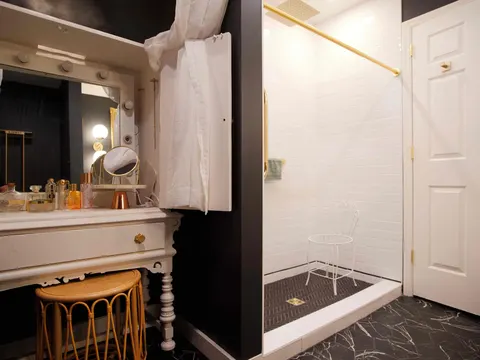
Flooring Installation
Tile, luxury vinyl and wood floors, with the subfloor done right first.

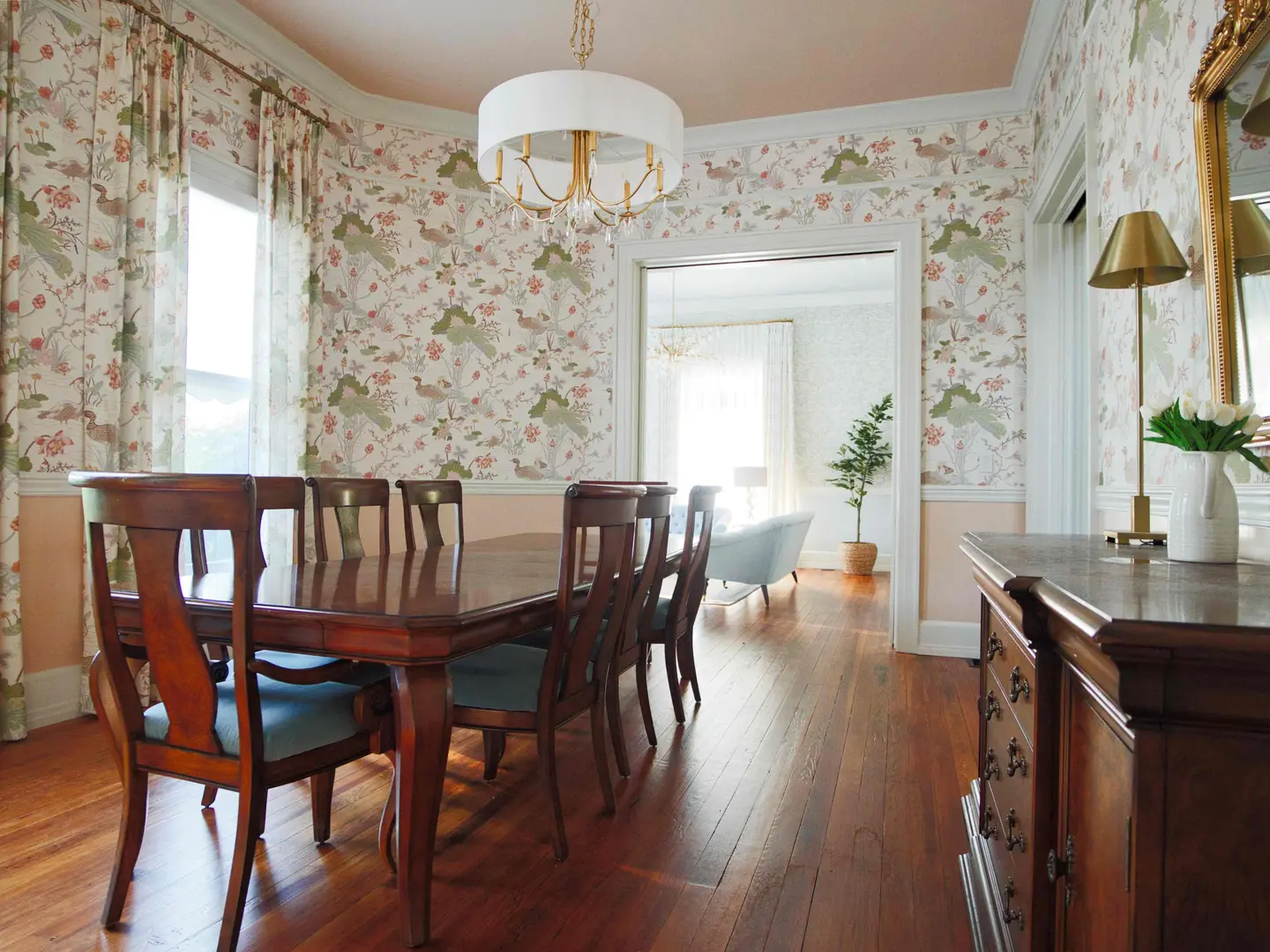
New solid and engineered hardwood, patches woven into existing floors, sanding and refinishing, and stained stair treads that match the rooms around them, installed by a licensed general contractor.
Hardwood is a natural material, and it behaves like one. Boards swell in humid Tennessee summers and shrink once the heat comes on in winter. Installed straight off the truck, over a damp subfloor or without room to move at the walls, a handsome floor can cup, gap or buckle within a season. Good hardwood work starts by letting the boards acclimate, measuring moisture in both the wood and the subfloor, and leaving expansion space that the trim will hide.
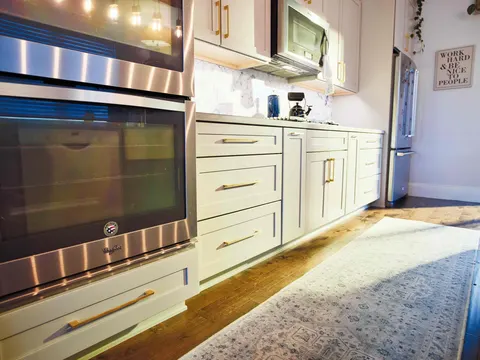
Plenty of hardwood projects are not about an empty room at all. A whole-home remodel takes out a wall and leaves a strip of bare subfloor between two rooms; an addition has to flow into the original floor; a kitchen gains space where old cabinets stood. The goal in each case is a floor that looks as if it was always there. JACCO weaves new boards into the existing floor, matches species, width and grade, then sands the whole area together so the stain reads as one surface.
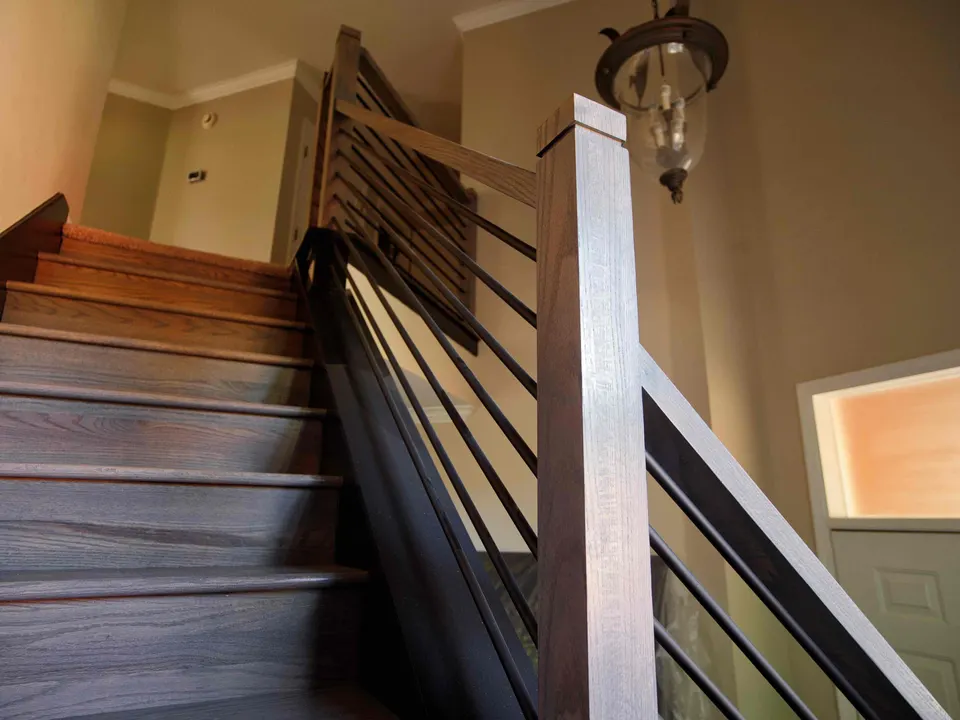
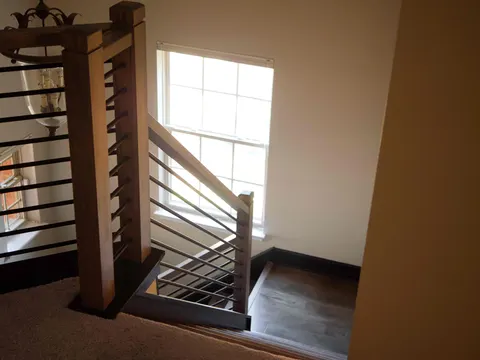
Stairs are where hardwood carries the look from one level to the next. Stained treads with matching nosings, paired with a railing like the horizontal metal balusters on one JACCO staircase, tie an upper floor to the rooms below. Our custom carpentry covers the railings and newels, while flooring installation handles tile and luxury vinyl for the wet rooms where wood is the wrong choice.
From a new floor in one room to a whole level refinished at once, each piece is listed in the bid along with the prep beneath it.
The condition of the existing floor decides the route. We look closely during the site visit and recommend the least invasive option that works.
Sound boards are sanded to bare wood, repaired where needed and finished in a new stain with fresh protective coats. The simplest way to renew a floor that is worn rather than damaged.
Damaged, missing or mismatched sections are cut out and new boards woven in, then the area is sanded and finished along with the surrounding floor so the patch disappears.
Old flooring comes up, the subfloor is checked and corrected, and new solid or engineered hardwood goes down, finished on site or prefinished, with stairs and transitions to match.
We check the moisture content of the boards and the subfloor before installation and let the wood acclimate inside the house, which prevents most of the cupping and gapping that appear after the first season.
Where new flooring meets old, boards are toothed in at staggered lengths instead of ending in one straight line, so a removed wall or new opening leaves no scar across the room.
Sanding and finishing are planned so rooms are sealed off, furniture is protected and you know exactly which areas are off-limits while each coat of finish cures.
Site visit, measurements and a written bid tied to a clear scope of work.
Selections settled, materials lined up, a detailed schedule, and a protected, clean home while we build.
We walk the finished work with you and close the project when every item on the list is done.
Both have real wood on the surface. Solid hardwood is a single piece of wood through its thickness and can be sanded and refinished several times over its life. Engineered hardwood has a hardwood wear layer over a stable plywood core, so it moves less with humidity and suits concrete slabs and basements better. The right choice depends on the subfloor, the room and how long you plan to stay in the house.
Usually, yes. We identify the species, board width and grade, source the closest available match and weave the new boards into the existing floor. Sanding and refinishing the old and new areas together is the step that makes the color and sheen read as one floor. Very old or unusual flooring can be harder to find, and we tell you during the bid if an exact match is unlikely.
Often, yes. If the boards are thick enough, firmly fastened and not badly damaged, sanding to bare wood and refinishing can make a tired floor look new and allows a change of stain color. Floors with deep water damage, severe cupping or a worn-through engineered wear layer usually need sections replaced. We inspect the floor during the site visit and recommend the route that fits its condition.
Hardwood works well in many kitchens as long as spills are wiped up and the finish is maintained, and it flows naturally from the living areas next door. Full bathrooms are different, because standing water and steam can damage wood over time. For wet rooms we usually suggest porcelain tile or luxury vinyl, which we also install, in a look that complements the hardwood nearby.
More disruptive than a prefinished installation, mainly because the finish needs time to cure. Furniture leaves the rooms being refinished, the area is sealed off to contain dust, and nobody can walk on the floor while coats dry. Some finishes have a stronger odor than others, which we discuss when choosing one. You get a schedule in advance showing which rooms are unavailable and for how long.
Tile, luxury vinyl and wood floors, with the subfloor done right first.
Staircases, built-ins, trim and millwork made for the house.
Full renovations, room by room or all at once, under one contract.
Interior and exterior painting with the prep work done first.
Jonathon will follow up personally to schedule a visit. The first consultation is complimentary.