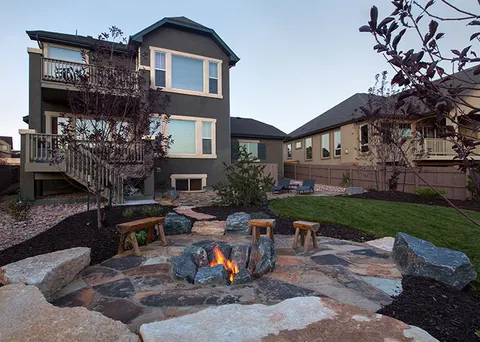
Hardscaping
Stone, pavers, walls and fire features that frame the yard.

Paver patios, garden paths and steps built from the subgrade up: excavated to firm soil, compacted in layers, edged so nothing creeps and finished with joints that lock the surface together.
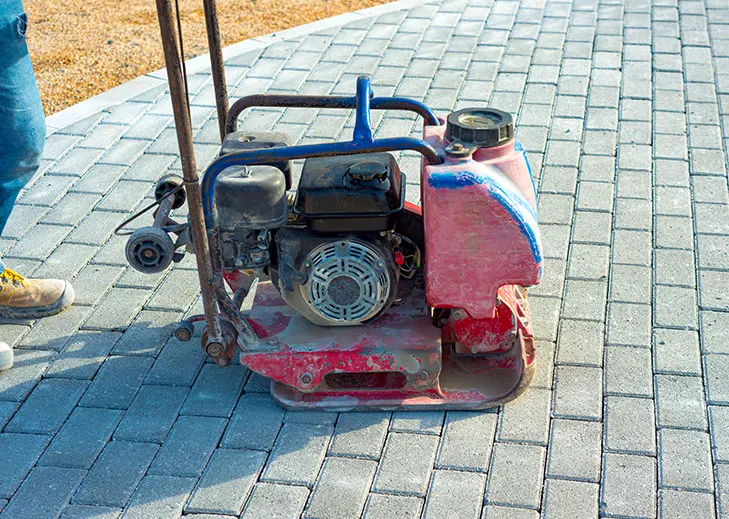
When a paver patio sinks, develops ruts or sprouts weeds through widening joints, the pavers themselves are rarely at fault. The trouble sits below them: a base that was too thin, stone that was dumped and never compacted in layers, or borders that let the whole field drift outward. On a well-built patio the visible pavers represent the smallest share of the work, and most of the labor is finished before the first unit is laid.
JACCO starts by excavating to firm soil and shaping the subgrade so the finished surface will fall away from the house. Crushed stone base goes in and is compacted in lifts with a plate compactor, then a thin screeded bedding layer sets the final height. Pavers go down in the chosen pattern, are cut cleanly at the borders and are held by an edge restraint. Joint sand is swept in and vibrated into place, so the units bear against one another as a single surface.
Pavers suit patios, garden paths, landings and low steps, and they pair naturally with the walls and fire features of our hardscaping work. Unlike a poured slab, an interlocking surface can be lifted and relaid in sections if a root heaves it or a utility line needs repair. If you are still weighing pavers against concrete or natural stone, our patio construction page compares the options side by side.
Every paver project starts with the base. These are the requests we hear most, each priced from a written scope after we have walked the site.
Crushed stone is placed and compacted in thin lifts rather than spread once and driven over. Each layer is checked for grade, which is what keeps the surface flat through freeze, thaw and summer storms.
Without restraint, pavers slowly creep outward and the joints open up. Every field is locked by a concealed edge restraint or a concrete border, set on the same compacted base as the pavers themselves.
A paver surface still has to shed water. We set a gentle fall away from the house toward a safe outlet and add drains where downspouts or a hillside would otherwise wash out the bedding layer.
Site visit, measurements and a written bid tied to a clear scope of work.
Selections settled, materials lined up, a detailed schedule, and a protected, clean home while we build.
We walk the finished work with you and close the project when every item on the list is done.
Almost always because of what is underneath. Pavers settle when the soil was not dug out deeply enough, the stone base was too thin or never compacted in layers, or water kept soaking the ground below the patio. Missing edge restraint lets the field spread so joints widen and units rock. A properly built base, graded to drain, heads off most of these problems before they start.
Often, yes. Because pavers are individual units, a sunken or heaved section can be lifted, the base corrected and recompacted, and the same pavers relaid. If the original base is poor throughout, or the pavers are cracked or no longer made, a full rebuild may be the better investment. We look at the patio during the site visit and explain which approach makes sense for it.
Mostly through good installation. Joints that are completely filled and compacted leave little room for seeds to take hold, and a surface that drains well dries out quickly between rains. Polymeric joint sand, which firms up once it is wetted, adds more resistance. Occasional sweeping and topping up any low joints keeps the surface tight over time.
Usually, yes, at installation. Pavers take more labor to lay and cut than a poured slab, and the base work is similar or greater. The trade-off is flexibility: individual units can be lifted and replaced, and the surface avoids the long cracks a slab can develop. Pattern, paver style and site access all affect the price, and we can compare both in the bid if you are undecided.
Stone, pavers, walls and fire features that frame the yard.
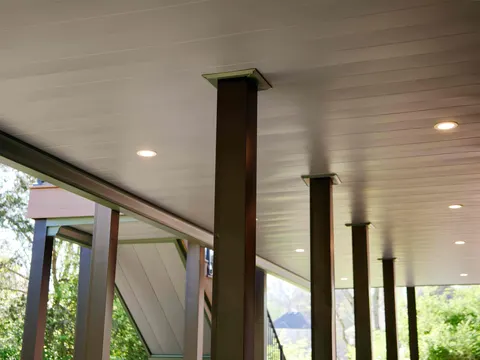
Covered and open patios that extend the house outdoors.
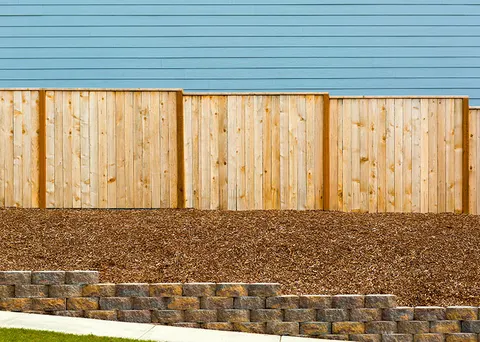
Block and stone retaining walls for sloped Middle Tennessee lots.
Slabs, footings, steps and walkways poured for the long haul.
Jonathon will follow up personally to schedule a visit. The first consultation is complimentary.